Does Nintendo Continue to Demonetize Youtube Videos
YouTube monetization means that your videos are making money with every view.
However, YouTube usually demonetizes videos in response to one or more infractions of its community guidelines. After demonetization, YouTube revokes your right to earn money with each view, all on a video-by-video basis.
To qualify for YouTube monetization, you must have more than 1,000 subscribers and at least 4,000 hours of received watch time over the last 12 months, but these are simply baseline eligibility requirements. You can meet both of these figures and still get demonetized on YouTube. Let's see how.
What Does Demonetized Mean on YouTube?
YouTube channel demonetization occurs after a community reviewer determines that your video is not advertiser-friendly—that is, it's a piece of content that YouTube's partner brands may not want to be associated with, in the eyes of the patrons that they're trying to reach.
While YouTube won't usually take down your demonetized video outright, you will lose the right to earn ad revenue on it from that point forward. Even if you don't get fully demonetized, brands may choose not to run ads on your channel before YouTube flags any of your videos as questionable.
Turning monetization off on content that doesn't make the grade is the best way to remain in the YouTube Partner Program and continue earning money on the rest of your uploaded videos. Many, however, prefer to live well within the rulebook.
For the entirety of what YouTube recommends when creating advertiser-friendly content, the official list of YouTube demonetization rules is available for you to explore. We've called out a few major red flags to remember below.
1. You Uploaded Something Offensive, Harmful, or Unkind
One point that the YouTube demonetization rules make very clear, right from the get-go: harassment, cyberbullying, and hate speech are all prohibited on this platform. However, offensive content may not always come in the form of shock or dark, inappropriate humor. YouTube also recommends turning off ads on videos where the main topic is controversial, even if the information isn't necessarily ridiculing the subject at hand. Why is this so?
Advertisers may avoid opting into videos about things like self-harm, suicide, sexual abuse, eating disorders, domestic violence, and the abuse of children. Anything "incendiary and demeaning," purposefully inflammatory, or slanderous toward a person or group of people will be more than enough to get you demonetized.
Offensive violence will get you demonetized, as will graphic, explicit, and disturbing depictions of violent accidents and injuries, human or animal body parts, bodily fluids, and human waste. Insensitive accounts of sensitive current events may also be deeply upsetting to both your advertisers and your viewership. So, as the creator, make sure to create content responsibly.
2. You Chose the Wrong COPPA Audience
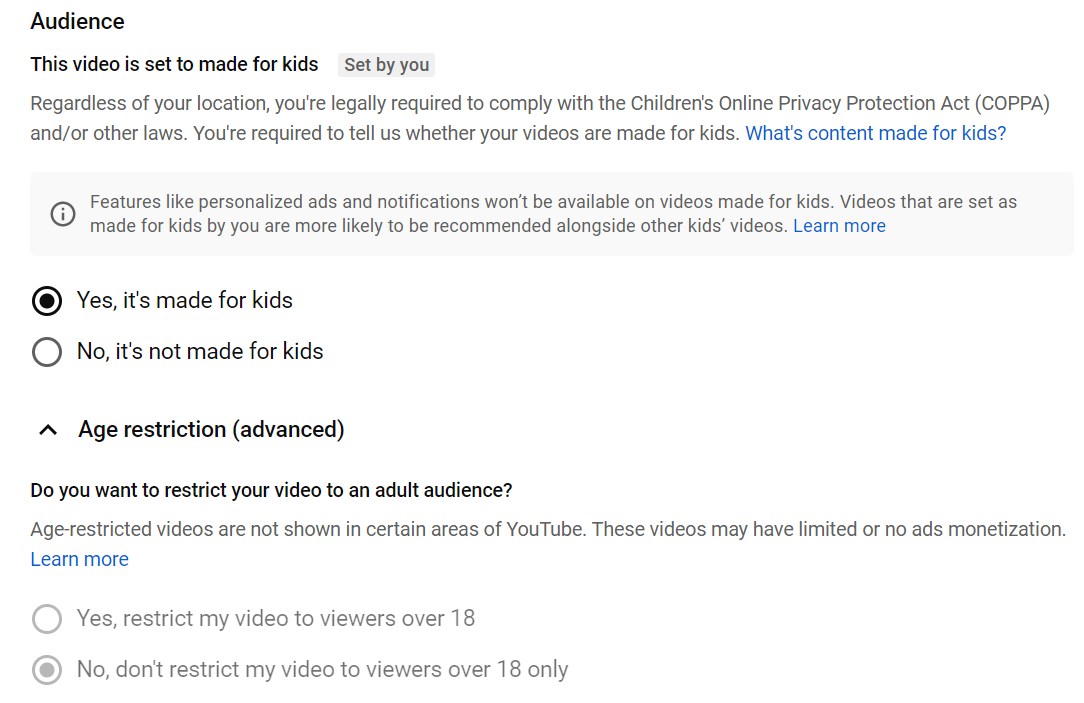
All YouTube creators are asked to rate each video upload as appropriate for children or not following the Children's Online Privacy Protection Act. If not, you can also restrict access to only users over 18 years old.
Many YouTube affiliates do not associate with the adults-only section of YouTube, which means that videos falling under this second category may only be subject to limited monetization, or even none at all.
YouTube's rules regarding COPPA-approved children's content are much stricter than the rest of their guidelines on demonetization in general, and it's really easy for a video labeled COPPA-safe to fail a community guideline review. If you've marked your video as being kid-friendly, it's best to avoid passing references to things like sex, violence, and foul language altogether, just to be on the safe side.
3. Your Video Contains Profanity
Can you swear on YouTube? Yes, of course you can, but it might get your video demonetized.
Profanity isn't necessarily outlawed on YouTube. Excessive profanity beyond your everyday four-letter favorites, including slurs and anything unnecessarily explicit in your thumbnail image, goes against YouTube's guidelines for creating ad-friendly content.
If you regularly use YouTube, you probably know by now that people curse in videos all the time. So, where is the demonetization line drawn, you ask?
Simply put, if you can say it on daytime television, you can say it on YouTube without getting canceled. Curse words like "hell," "crap," and "damn" are all acceptable to use. Allusions to your standard, upper-level expletives, such as "WTF," are also fine in most cases.
YouTube strongly advises its creators to keep the first 30 seconds of the video clear of anything that toes the line for the sake of the brand that the monetized video will eventually become an ambassador of.
Even beyond the mildest ways to cuss, infrequent profanity may sometimes be acceptable when it occurs well past this critical window of time. In the end, it's all about that conversion funnel, but if your video ends up getting demonetized as a mistake, you can ask for a second review.
4. Your Video Is Too Sexually Explicit

YouTube isn't a pornography site. To keep things relatively family-friendly for its advertisers, anything that goes beyond your usual make-out scene should probably be left behind on the cutting room floor.
Vague innuendos are usually acceptable; censored nudity included for a comedic effect is also perfectly fine, as is any scientific or educational reference to things of a sexual nature, such as nudity in a Renaissance painting. Anything that goes beyond these caveats, though, you're better off leaving out of your YouTube video.
This isn't just limited to explicit nudity or depictions of sexuality but also overtly sexual audio, text, or thematic dialogue.
YouTube Demonetized Me: Now What?
There's nothing worse than seeing that dreaded YouTube yellow mark next to one of your most popular pieces of content. You can always request a second review if you believe YouTube took down your video wrongfully. You're also free to modify your content, removing or replacing anything problematic in the eyes of the community.
When all else fails, you're always able to simply turn off monetization for any offending videos on your channel, allowing you to continue earning through the rest of what you've uploaded. The YouTube Partner Program is incredibly flexible and forgiving in this way. If you play by the rules, it's a great way to earn money online as a content creator.
gonzalezherefaing1938.blogspot.com
Source: https://www.makeuseof.com/reasons-youtube-channel-demonetized/

Enviar um comentário for "Does Nintendo Continue to Demonetize Youtube Videos"